Tuesday, 2 July 2013

Steely Nolan


Zack Snyder's notable directing credits include The 300, Sucker Punch and that stupid owls movie. Perhaps his only saving grace was his daring adaption of Alan Moore's classic The Watchmen. I dreaded what he would do to my beloved Superman franchise. 

Mr. Snyder, you bastard, you've proven me wrong.
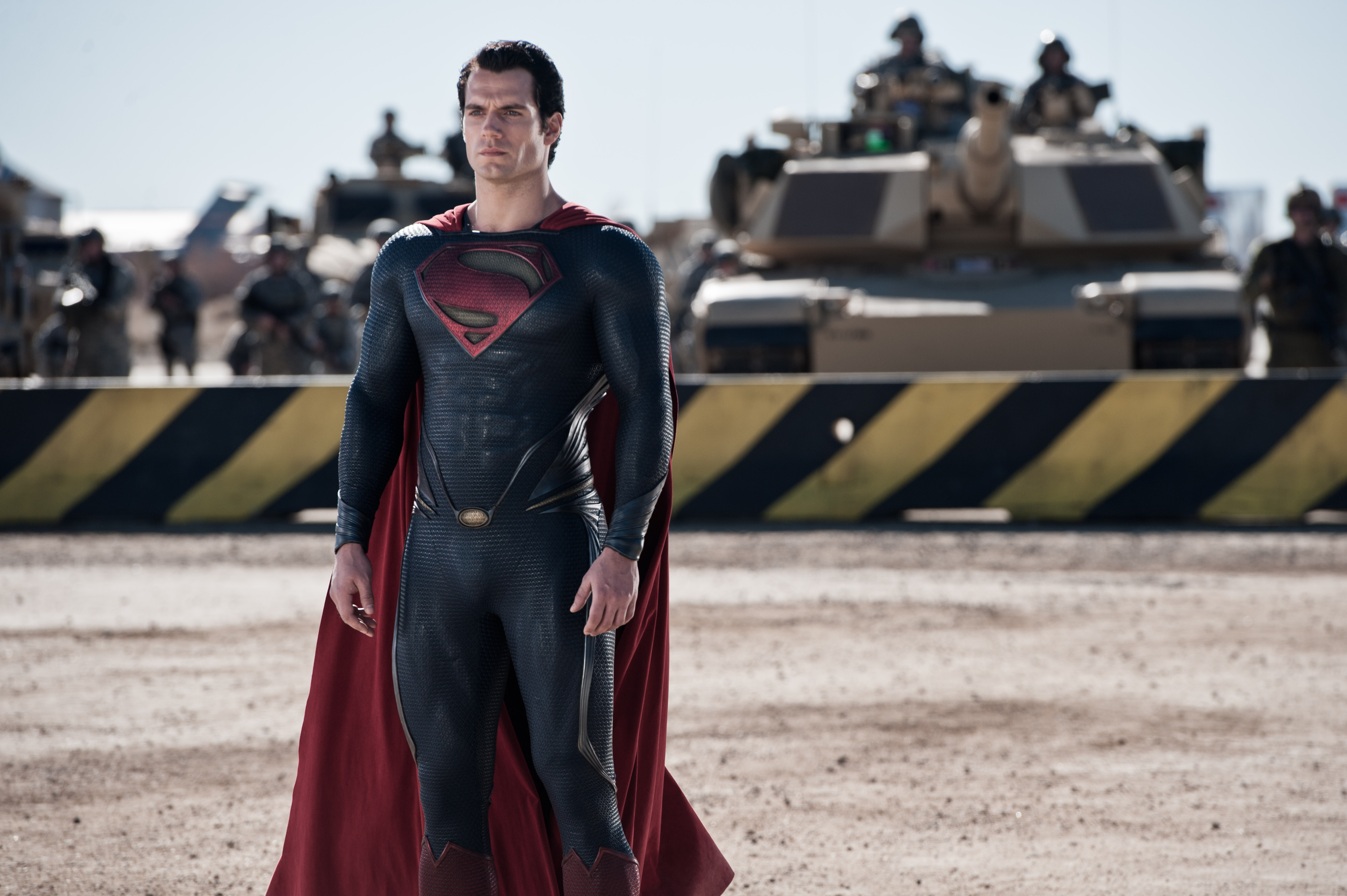


As you may well have guessed, I thought that Man Of Steel was a good movie. I won't go so far as to say excellent - it has its fair share of flaws. But given the scope of what he was trying to do and the constraints of a 2.5 hour movie, I think Zack Snyder and Christopher Nolan did the best that they could.

The fact that Christopher Nolan's name is so attached to this movie is rather telling of a few things. This is a rare occurance - the studios marketed their executive producer so hard that you can be forgiven for forgetting that Man of Steel is a Zack Snyder film and not a Nolan film. 

Whatever the marketing purposes may be, though, Nolan and Snyder's chemistry worked to the benefit of the film. The Dark Knight, Inception and his other countless films fairly firmly establish Christopher Nolan as one of our generations best storytellers in film. His skill in dancing characters and situations in a believable and profound way is just what the Superman franchise needed - the realistic anchor that made The Dark Knight such an amazing film.

But what Superman will always need in whichever incarnation is a sense of optimism, awe and wonder. This is where Snyder shines. Snyder brings to the table an element of fantasy and optimism to lift the weight of gravity that Nolan is so famed for bringing to his films. And what results is the best possible reboot that the Superman film series could have hoped for.

Kansas Family - Clark Kent (Henry Cavill) and his adpoted Mother (Diane Lane)
The reboot keeps together all the classic elements of the series and adds in some extra spice to keep the movie from being overly predictable. Jonathan and Martha Kent cross over into moral grey areas, trying to keep their adopted son's abilities a secret. Lois Lane has finally thrown off all the anti-feminist shackles of ditziness that plagued her throughout all the past portrayals. And Clark isn't a standup American home-boy. He's a drifter trying to figure out where he came from and what he should do - there's only so much rural American farmers can tell you about being a super-powered alien.

Where Man of Steel shines is in portraying Superman's relationship with humanity. The major theme in the movie is that of trust. And he doesn't trust America to know his secret, just as they don't trust him having hidden among them for 30 odd years. The world doesn't immediately take a shining to him because he puts out a few fires or saves a cat from a tree. The movie does well to grapple with what would happen if an Alien showed up on our doorstep.

Special mention must go to the film's addressing of people's core issue with Superman - that he's invincible. This is very much established that it's not the case. We see what Superman Returns failed to really show us - peril. Superman gets hurt, beaten down, even bleeds fair bit. This is a Superman who is pushed to his limits in a painful way. 


Not quite sure of himself, gearing up for battle

I did mean what I said, however, when I said that the movie was 'the best that they could do'. In order to do this movie and keep in believable and epic, the pace of the movie had to be set to fast forward. Scenes are cut together quickly, large swathes of time and character development left up to our imagination and a few significant plot developments happen off screen. 

All the criticisms I've read about this movie more or less stem from a disappointment in the way the plot and characters are developed. Perhaps I look at Man of Steel through the rose coloured glasses of a fanboy, but the way the movie played out felt as if all those extra scenes were written, and maybe even filmed, but not shown. Such is the constraint of having to contain an origin story within 2.5 hours that a significant chunk of these things need to be abridged, or even left out altogether. 

That having been said, Batman Begins suffered from many of the same detriments. But that movie gave The Dark Knight the ability to cast off the shackles of having to establish origins and focussed on Bruce Wayne's single greatest conflict and delivered to us the best superhero movie to date. I sincerely hope that Man Of Steel's sequels (which are now in production) will do the same.
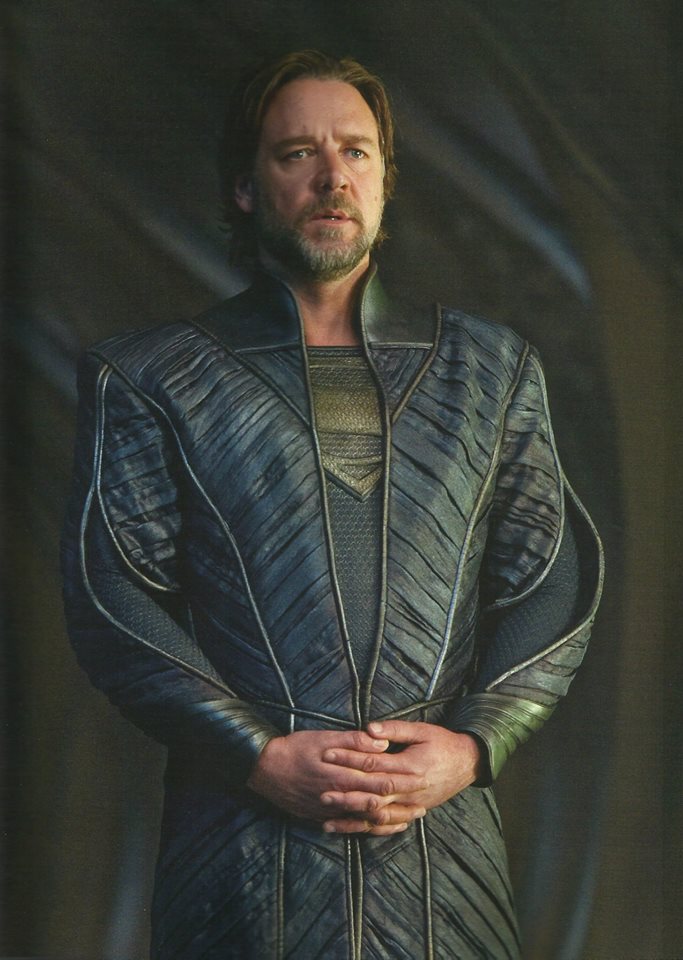

Footnote: I laughed like a drain when I originally heard that Russel 'telephone-throwing kiwi' Crowe was playing Jor-El, a part previously played by Marlon Brando.

I walked out of the cinema thinking that he was kind of a badass.


....
Post-Scriptum - Bugger it. I'm going to do a spoilerific analysis at some point in the near future. Stay Tuned!

Thursday, 31 January 2013

Ace in the Hole

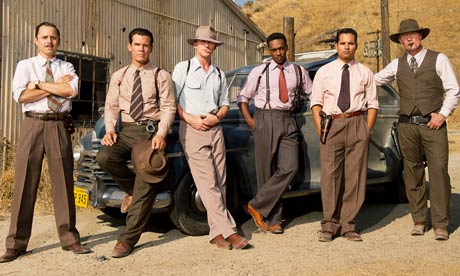
Gangster Squad wasn't a spectacular movie by any stretch of the imagination. I walked into the cinema knowing that it had lukewarm reviews, but I was expecting something of a decent action romp nonetheless. I will leave more professional reviewers to sum up exactly why it was so ordinary. But what I was particularly annoyed by was the absence of a key element - the Ace in the Hole.

Gangster Squad -  missing something

Basic rule of watching most adventure/action movies - we want the good guy to win. Basic rule of making most adventure/action movies - make the good guy win. Puritanical cynicism then asks the question 'why do we watch these movies if we know that the good guy is going to win?' What hooks us into forking out to pay to go into a cinema and invest 2-3 hours of our time if we already know the ending?

This, though, is a question as old as literary criticism. And the answer is therefore nearly as old - we want to experience the journey. We invest time into a-run-of-the-mill, happy-ending story because we want to see what leads up to that foregone conclusion. But what a lot of story tellers seem to be overlooking these days is the Ace in the Hole - the 'thing' that allows the good guy to beat the bad guy at the climax.

Allow me to elaborate. Ignoring a multitude of very good and very intelligent exceptions, action/adventure films follow a fairly vanilla three act structure. In Act One, we meet the characters and get introduced to the whole situation. In Act Two we are off on our journey and all manner of shenanigans ensue. These shenanigans are often little character building adventures, the execution of different parts of a plan or a training montage. But most importantly, Act Two contains the confrontation and the low point, where our hero fails in a confidence shattering manner. It's from these depths that our guy then rises and launches into Act Three - the climax and resolution, where the bad guy gets beaten to a pulp.


Three act structure - source

The good films do one of two things with this formula. They either play with the formula itself, sending the audience on an unexpected ride (cf. The Dark Knight, Skyfall), or use the conventions in a particularly effective manner. And as a broad generalisation, this requires a confrontation that has the audience sinking further and further into their seats, a low point that makes you genuinely believe that the hero cannot come back, and then a climax and resolution that has us gripping our seats then whooping for joy.

But the key to that entire emotional process is the payoff - the Ace in the Hole. In order to rise from the low point, we expect the protagonists to unlock something vital, be it a weapon (like the sword Anduril from The Return of the King) or emotional acceptance (like The Matrix, Hot Fuzz and countless other examples). This something is then used as the hero's ace in the hole in the final confrontation.

Neo's acceptance of what must be done gives him the power to defeat the Agents
The novelty of the Ace in the Hole should not be taken so lightly. It shows progression in the hero's character and lets us share in a feeling of self satisfaction at the end (when the Ace is waved in the face of the antagonist as he's being defeated). In The Matrix, Neo's acceptance of his own destiny was vital in proving to Agent Smith (and to the audience) that there's no such thing as 'only human'. In Hot Fuzz (albeit in a somewhat satirical manner) Sergeant Angel's decision to dispense with his inhibitions and let loose with the action movie cliches surprises the entire village. The existence of the Ace makes our inner voice go 'yeah, now he's gonna get it'. It's a particularly satisfying feeling, and a payoff after the emotional turmoil in the Act Two confrontation.

What about Gangster Squad? I'm not going to spoil anything particular here by saying that after a violent gun fight, the Big Bad - Mickey Cohen - gets beaten and thrown in jail at the end. My beef is that the protagonist John O'Mara didn't learn anything - and I mean at all. All that happened was something went wrong, then he just says 'screw it, I'll go after Mickey Cohen like I would have even if everything hadn't gone wrong'. The movie was going quite well from a stylistic point of view, if a somewhat simplistic and unbelievable storyline. But there was nothing to hang onto emotionally during the climax of the film. And that ruined an otherwise average movie experience for me.

Gangster Squad - All races represented, but still missing something
To the director's and screenwriters' credits, there are some plot hooks here and there. But they come in awkwardly and don't provide the sufficient emotional payoff at the end.

Next time you watch a film, watch out for the three acts. It makes for some interesting comparison of film. 

Sunday, 9 December 2012

Where am I going to buy my guitars?

As a small disclaimer - I will admit right out that I have little to no understanding of economics on either a micro or a macro scale. What I want to express in this post is my personal experiences as an amateur musician in Sydney. I understand that as good as times may have been in a personal sense, sometimes these changes just have to come about for the world to roll on in an economically sustainable sense. This is just my personal ode to Rocco, from Music 101. 

Allans Billy Hyde - possibly the most ubiquitous 'modern' musical instrument store chain in Australia - closed its final store two weeks ago. I've been out of town for a while - so this blind-sighted me somewhat. The thought of not being able to say "well I can always head to Allans" if I can't find something in the guitar shack around the corner of my house makes me feel a bit lost and confused. 

Allans Billy Hyde Pitt St store closing down sale - original photo from flickr.
That said, I'm actually not particularly concerned about not having somewhere to buy my guitar gear  (contrary to the title of this blog post). If these fighting words from Gallin's Music are to be believed, the gaping market hole left by the liquidation of both Allans and Billy Hyde will be filled by Gallin's and its parent company. That is, Gallin's and its affiliates will pick up the market share of name brand guitar and band equipment and expand accordingly. 

My particularly visceral emotional response to this news came from one damn lousy afternoon I had about 3 years ago: when I found out Rocco's Music 101 had closed down.

Music 101 was a tiny little guitar store in the inner west of Sydney. It lay on a strip of Parramatta Road in the suburb of Annandale that I like to call "the guitar strip". That length of road had vintage guitar specialists, a dedicated instrument repair shop and a peppering of small independent guitar stores. It ended at Billy Hyde Camperdown - arguably the largest guitar store in Metropolitan Sydney and a commercial behemoth amongst the other smaller boutiques.

Music 101 was the smallest of these. The first thing you expect to see when you walk into most guitar stores is racks upon racks of shiny new guitars of all the famous brands. But the first thing you saw when you walked into Music 101 was a rack of music memorabilia (framed posters and the like), old records, two conspicuously half finished guitars, a stack of old guitar amplifiers in one corner and a rack of guitars (that almost no one has heard of) in the other. The centre piece of this wonderful store was a grey 1970s leather couch slap bang in the middle. This couch, of course, was positioned so that you had a front seat to an overused work-bench and the big curly-haired Italian man who inhabited it - Rocco.

Rocco, sitting behind his work bench - source
That couch summed up everything that was great about Rocco's store. When I walked into any guitar store as a young'un, I was terrified of touching any guitar for one reason - the salesmen. If you touch it, you had to have a pretty damn keen interest in buying it. The salesmen would either go all out with their sales pitches, or kick you out on your ass for wasting their time.

But when you walked into Rocco's store, without fail you'd be on that couch, playing some new guitar that he'd gotten in the week before and talking about how much it sounds like a Fender Stratocaster, but with a different texture. Or colour. Or clarity. Or aggression. Rocco was in the business not because he loved music, but because he loved sharing that music with other people.

His attitude is bessed summed up with this story: when I first met him, I was looking for a bass guitar. And it was pretty obvious that he didn't have a bass guitar that was suitable for me. But instead of trying to sell me what he did have, he took a full hour out of his day, sat me down on the couch and taught me how to pick out a guitar that would be perfect for me. And he did this so that I would have the right tools to buy the guitar from someone else.

And mind you this was all happening whilst other people were walking in and out of his store. They would pop in, either to say hello, look for a guitar or drop one off for servicing. Rocco would invite them in on the conversation, asking the passers by if they had any tips for the young'un sitting on the couch (in time, I too became one of those passers by, giving advice to other young'uns). He didn't care that you weren't in there to spend money, the only thing he wanted was to make sure that you realised your passion in music.

That he ignored how much money you would spend in his store, however, may have been his ultimate downfall. He knew that he couldn't compete with the Billy Hyde megastore down the road, so he tried to market himself on his alternative qualities as a vendor. Instead of going for the big name brands (Fender, Gibson etc), he went for the smaller, less well known but equally awesome brands.

The essential problem with this strategy, though, is that you have to do extra legwork to try to market your  product to most buyers. Rocco and others like him have to do a lot of extra convincing to prove that you don't have to buy a Gibson Les Paul to get that the guitar that suits you. This extra work, whilst an excellent investment in karma, doesn't yield good cash dividends.

The Fender Stratocaster - every man and his dog knows one and wants one
So one afternoon 3 years ago, I brought my guitar to him for it's 6 monthly checkup -and Music 101 wasn't there. Another guitar store had bought Rocco out. Despite all of the friends and friends of friends I tried to point his way, it wasn't enough. His business lost out and he had to quit music.

Being an aspiring hippie (or hipster, take your pick), I was really angry at 'the man' for a long time. I blamed Allans Music and Billy Hyde. I was angry that commercial marketing won out over something that was special and unique and couldn't be replaced. In my mind, Allans Billy Hyde had won, and they didn't deserve to.

So imagine my shock when even they announced liquidation.

As I said earlier, the situation is by no means dire. Rocco's was an isolated case. There are other small guitar stores in Sydney that sell big name brand guitars - more than enough to fill the market gap. And if the analysis given by Gallin's Music is correct, Allans Billy Hyde went under due to shoddy management rather than market decline. On a positive note - these other stores do tend toward the passionate side of music - preferring discussion to sales. But you can always spot the glint in the salesman's eye. And when you do, it has the potential to ruin what might have been a sincere exchange.

When I heard that Allans Billy Hyde were going under, I felt a pang of sadness and disappointment. But it wasn't for them, it was because I remembered Rocco. Coming to that store, sitting on that couch and watching that man at work is what I miss the most.

I hope that someday he'll open up a store again. I'll bring all my friends. Bring yours.

Friday, 26 October 2012

Zombies, and such

The mantra of zombie-apocalypse fiction is essentially this: watch people go mental as the world goes to shit around them. And my god, we can't get enough of it these days.

Somehow, in the last 10 or so years, Zombies went from the realm of hammy horror movies to the obsession of not only geeks, but a good chunk of the young populous. The once small sub-genre of horror has now become a monster of popular culture in its own right, spawning fiction that has more or less transcended the horror parent-genre from which it came. It's even inspired some very specific and quite successful satire.  So why do we love zombie apocalypses so much? Because we all reckon we could survive one. 

It wasn't always like this. Zombies were popular pre-2000, yes - but only as much as other recurrent horror themes, like dream invasion, maimed serial killers or crazy Texans with chainsaws. The zombie movies of old, the Night of the Living Dead series being possibly the most notable, were just horror movies. And as serious as horror movies try to be, sophistication and artistic integrity has always been sacrificed for the gore factor. Zombie movies, like other horror movies, used to have a very simple task - scare people and freak them out on a basic, visceral level.

Today zombie fiction is prolific - and some of it is pretty good at that. Both the comic and television series of The Walking Dead are doing immensely well and are quite compelling. The subject matter was treated quite realistically and with much consideration in World War Z. And it's been lampooned very successfully in both quintessentially English and quintessentially American ways in Shaun of the Dead and Zombieland, respectively. Our Zombie obsession extends beyond even fiction - we have best-selling educational guides on how to survive a zombie apocalypse

Shaun of the Dead - somewhat funnier than the Scary Movie series

Starting at around about the time Lost came out, the popularity surrounding zombie apocalypse fiction skyrocketed immensely. Despite the fact that show itself wasn't about zombies, it did well to popularise many of the themes that we seek from zombie apocalypse fiction today. It portrayed people put in a desperate (though not impossible) situation and losing their sense of human decency as the comforts of 'civilisation' were removed. We subsequently came to love Zombie fiction for two main reasons - survivalism and psychology. 

It is interesting to note that what sets Zombie fiction apart from other horror fiction is that humans are given a fighting chance. The Resident Evil franchise, 28 Days Later,  I Am Legend (the Will Smith version, not the one with Moses in) and pretty much all other zombie fiction depicts humans as having a damn good fighting chance. 'Healthy' humans are portrayed as being able to defend themselves, establish stable communities and, in some cases, even fight back the horde. The same cannot be said for much other horror fiction. The Halloween and Nightmare on Elm St. series tease the audience with hope that the protagonists can survive, but they are invariably overwhelmed by a boogeyman that proves to be too powerful for them.

Zombies are slow and dumb. Their advantages lie in the fact that they only have one weak spot, are unperturbed by fatigue or exposure, and in their overwhelming numbers. They are a manageable threat, and as a literary antagonist do not have any surprises that supernatural boogeymen or overly-intelligent axe maniacs traditionally have (by virtue of vaguely defined abilities). We seem to have zombies figured out, and for that reason, given a little bit of common sense, we believe we would survive in the face of the apocalypse. Pack camping gear, grab a melee weapon, avoid drawing attention, and, in the face of danger, go for the brains.

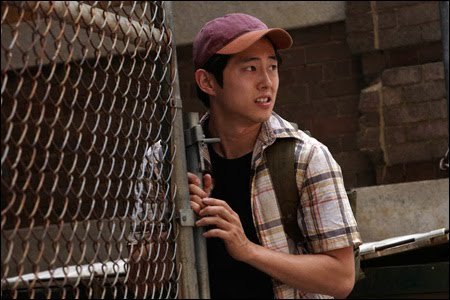
The seemingly widespread nature of this zombie survival knowledge adds an extra layer of enjoyment when flexing our 'well I could do better than that' reflex. When we read action based fiction, we realise the protagonists are probably more prepared than we are for the situations they get into. When we get into Drama shows, we acknowledge that human emotion is rather complex and that we don't have full control over how we might react to a given scenario. But Zombies? The pack from Shaun of the Dead should have picked a more fortifiable position than the local pub. Rick from The Walking Dead should have probably should have realised that Shane was a massive prick a long time before he actually did. And in the same series, the character of Glenn seems to be an homage to us, the well-informed zombie pop culture consumer. In a rather meta-fictional way, he's got a knack for avoiding zombies for no other reason than he is a massive geek.

Glenn from The Walking Dead  - 'What'd you do before all of this?' 'Delivered Pizzas'.
With this, though, we come back to where we started - watching a group of people lose all sense of human decency. This is a staple of survival fiction. If civilization falls down, if basic assumed comforts are taken away, a group of people will turn on each other and it will get nasty. Stuck up city types grow indignant at the lack of homely comforts and sometimes get violent. Hermits are forced to interact with other people in uncomfortably close quarters, and sometimes get violent. Police Officers, teachers and other authoritarians get ignored, and sometimes get violent.

We have become fascinated with the idea of human behavior under dire straits. Recent times and increasing existentialism has made us really want to examine the idea of humanity and human decency. Do we sacrifice our moral codes for the sake of survival? Is human decency and basic consideration other people just artificial constructs of our society, or should we live by these moral codes, even in the face of the end of the world? Do we euthanise the bitten infected little girl who's about to turn? What about when we start running low on food? Do we kill people, leave them behind so that we can make it to the next town?

These questions have popularised the standard profile for the protoganists of  survival fiction. He (or she) is invariably a strongly moral person who is forced to question whether or not he is meeting the bottom line for survival, or whether or not he is being brutal enough to protect the group he is leading. And they are a character who sometimes does abandon his morals. Despite the mistakes of the protagonist, good invariably wins out (except in some rare cases).

For this reason we derive some sort of hope from it. We get a payoff as an emotionally invested audience that human beings aren't just animals at the end of the day. When it all goes bad, we can be like the hero, we can defend humanity in the face of brutality. We like to believe so, anyway.

Jack of Lost - the protagonist mould into which Rick Grimes  from The Walking Dead and Shuan from  Shuan of the Dead are cast.


Given global warming, the impending energy crisis, recent economic disasters, increased awareness of ongoing global conflict and the end of the world slated for 2012, we can't help but be pre-occupied thinking about what would happen if an apocalypse came to pass. And as cynical as our parents claim us to be, we still want to believe that we could survive, and uphold human decency in the process. Zombies give us a well defined scenario that we can prepare for. We like it because at the end of the day, if a Zombie apocalypse happens (and by some stroke of luck it happens exactly in the manner in which we're expecting), you can be damn sure that we'll survive, shotgun and shovel in hand.