Showing posts with label batman. Show all posts

Thursday, 18 October 2012

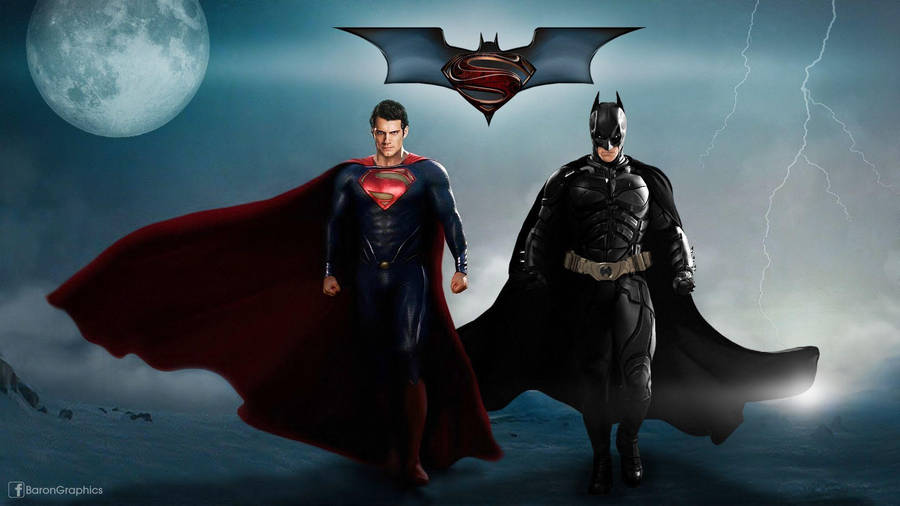
Batman is better than Superman

Unless you're a die-hard fanboy (ahem), it is very hard to read a Superman comic or watch a Superman film and feel connected with the big blue boy scout. It's taken me three awesome Batman films, all of the films leading up to The Avengers and the recent reboot of the DC comics universe for me to realise this - but it's become almost impossible to write a compelling Superman story. 
Batman stole his chips

Let me start by backtracking my blasphemy just a little. Superman has been many times referred to as the superhero - the first, the most righteous, and arguably the most powerful. He is the moral compass of the DC universe and the light which many other superheroes follow. He is invulnerable as well as being (pretty much) infallible in his morals.

But it's for precisely these reasons that the Superman franchise has become stale.

This becomes particularly clear when you examine the last two Christopher Nolan Batman films What made The Dark Knight and The Dark Knight Rises so compelling was that the Joker and Bane bested Batman - intellectually, physically and spiritually. One of the core elements that made Nolan's films so compelling was that you really did not know if Bruce Wayne could pull through. The grit and reality with which he portrayed that struggle was what we wanted to see.

This 'come at me bro' ends badly for the Bat.

The first problem with Superman is there is never much of a contest (in any believable context). In Superman Returns, despite the plot having to fall back to the anti-deus ex machina that is Kryptonite, he still pulls through and lifts an entire island of Kryptonite and throws it into space. And the Death of Superman comic story arc was supposed to present the Doomsday monster as his final match - culminating in a violent and bloody death. But this was all completely undone when a) he came back to life and b) subsequently defeated an entire army of Doomsday clones in a later Superman/Batman story arc. 

What films like the recent Amazing Spiderman and The Dark Knight Rises have is a true sense of heroic struggle. Peter Parker has to grow as a person and become stronger physically in order to actually get to a point where he can save the day. Bruce Wayne not only gets his back broken, but has to confront human indignity at almost every turn before he manages to beat Bane. In both of these movies we see the kind of conflict that makes us slump back in our seats and say 'crap, he might actually not make it out of this one'.

Andrew Garfield gets curb-stomped rather alot
And this is the second and essential reason why people don't connect with Superman - no conflict means no growth. In the first Superman movie, he looses and like a petulant child, disobeys his father's dictum to 'not mess with humanity' and decides to turn back time. With Doomsday, as with Superman Returns, the writers decide to take advantage of how ambiguous Superman's powers are and pull an extra can of whoop-ass out of the bag at a convenient plot point. 

None of these instances in Superman's history have inspired us to really feel for the guy. We connect with losers. And strangely enough the problem isn't that he never looses (nor do any of the other superheroes). The problem is we don't know how he could loose. No one has done a good job of defining the limit to his powers and put him in a context where he really has to struggle to break those limits. And no, Kryptonite doesn't count because it is an overused deus ex machina and its speculative effectiveness was nullified in Superman Returns.

In fairness - Superman II and Superman Returns show him getting curb stomped in a much similar fashion to other successful superhero movies, but neither really show how any personal realisation helps him overcome the conflict. This inner journey is what we crave from superhero movies. Ultimately we've grown to a point where we don't just want big effects, seeing superhero beings destroy the cityscapes. If we just wanted that we'd just go and see The Avengers again. There's a deep philosophy behind being a superhero and the idea of power being inherently tied to social responsibility. We're aware of this, and we get disappointed when we don't see it in a Superhero story.

So what would make a good Superman story? I have some ideas - but my not being a professional writer basically shafts all my ideas into the realm of fan-fiction (let us never open that box of despair). But the essential crux is that one would not only need to put Superman into some sort of dire situation, but one that takes a hell of a personal journey to fight back from. And given the stigma that already exists with how uninteresting he is, Zack Snyder is going to have to pull one hell of a cat out of his bag for Man of Steel.


Don't get me wrong - I still love Superman. Despite the fact that he's a wildly imaginary character, I look up to him. There's something in his infallibility and his bravery and his strength that gives you something simple and grand to aspire to. But I'm a particular type of romantic that way. I realise that the rest of the world has a tendancy for not being giddy at the thought of having a big red S emblazoned on their chest.

Sunday, 23 October 2011

Captain America is a Walking Bullseye

"Now get your ass up here. We've got just enough time for me to spray-paint the bullseye on your back. Ah, by bullseye I of course mean, uh,  camouflage..."
- Sarge, Red Vs. Blue: The Blood Gulch Chronicles
I was mostly quite impressed with how Joe Johnston's 2011 film adaptation of Captain America initially handled how monumentally silly Captain America's costume looks (even by comic-book standards). Steve Rogers, AKA Captain America, is initially recruited by a United States Senator eager to increase the revenue going into fighting World War II and is used as a predictably very cheesy poster boy for the war effort. Essentially, he becomes a mascot for war-bonds

Against the backdrop of gaudy vaudeville dancers singing about the war-effort and capturing the heart of a more impressionable 1940s America, it makes sense then that Captain America would wear the long-johns version of the American flag, don a cap with a giant 'A' on the forehead and carry a shield that's begging to be punched because of how stupid it looks. It's not meant to be functional or even cool - it's meant to be a tongue-in-cheek homage to the original Captain America costume, satirising how silly it all looked.

Then they unveiled his battle costume. And the whole point of the satire kind of went out the window.

Captain America - Joke Costume and Actual. Spot the difference.
In general, superhero costumes are meant to be, well, a bit silly. But I am on the side of fanboys, comic-book readers and cartoon followers when I say that they do (for the most part, at least) have a point beyond the obvious 'look at me' factor. They can be infinitely functional and serve as good identifiers for a brand, much like for the Police or any Emergency Services. And in most of the cases where costumes are showy and gaudy, that showiness and gaudiness has a point.

To illustrate this, I'll take a look at the hero who's appearance is easiest to justify - Batman. Though it started off as being a costume mostly for the sake of being a costume, the Batsuit has evolved over the years into something which has two distinct and very necessary motivations: the armour, and the symbol.

Batman over the years - from silly to functional
Batman's armour plays a major role in Batman's overall abilities. Depending on which versions you happen to come across,  the Batsuit is made from materials that range from specialised and hardened rubber, to armoured kevlar plating. The point of this, of course, is quite simple - to take bullets, punches and hard falls. The amount of acrobatics and sheer violence involved in Batman's day to day activities would necessitate a hard outer shell. Street thugs and your average bank robber wouldn't really stand a chance punching into abs lined with hard metal.

Secondly, the symbol and appearance. Off the bat, its fairly obvious that the colour scheme that Bruce Wayne has chosen is good camouflage for night-based shenanigans in a Gothic inspired city. But beyond that (and a point which works such as Year One and Batman Begins go into a fair amount of detail) is that the Bat and the Bat-crest are a symbol. This symbol is meant to inject fear into the heart of criminals and, to a lesser extent, hope into those who would uphold justice. The prevalence and recognition of this symbol would mean that Batman doesn't have to beat up criminals in order to stop the crime. Criminals don't commit crimes because of the mere threat of being beaten to within an inch of their life by a borderline psychotic.

And besides that, it actually looks pretty damn cool.

Either if not both of these two points hold true for most other superheros. The Green Lantern wears an identifying uniform just like any other law enforcer (domestic or inter-planetary). The acrobatic feats performed by Wonder Woman, the X-Men, Spiderman and the Flash would mean that they need leotard-like tights to allow for certain degrees of freedom in movement. Superman wears a red cape and a giant 'S' on his chest to inspire hope, selflessness and goodwill in others.

Green Lantern, Wonder Woman, Cyclops and Spiderman

So what's my gripe with Captain America? Two things.

First is the setting of his story and his acts. Admittedly the World War II setting is something that is particular to the movie and a select number of comic books. Here is a man who is supposedly a super-soldier, participating in convert ops and special tactical missions in order to undo the Nazis. With all of this in mind, you can't help but realise that, especially for someone who specifically is not invulnerable, his costume screams 'Bullseye'. His shield is circular and has very colourful concentric rings to let a lookout know that he's coming from a kilometre away. There's a massive bright white star on his chest to guide a marksman to his vital organs. And you get bonus points if you manage to sock him where the 'A' is on his forehead.

The second point is that it's all just too...American. As much as Superman has been pushed over the years to eschew particularly American values ("Truth, Justice and the American Way"), his appearance and presentation have always maintained a level of flexibility such that he can represent these values from a universal perspective. His 'S', Spiderman's webbing and even the stars on Wonder Woman's undergarments can be removed from the 'American' framework if the writer sees fit to have them represent greater values. Captain America is too closely tethered to the stars and stripes all over his body and his name for that ever to happen.

Maybe, since most of the superhero movie-watching, comic-book-reading public come from America, this doesn't matter in the grand scheme of things. That's fine. As long as he stays bright and stupid enough for anyone gifted with human sight to pick him off for a distance, the rest of the world will be ok.

Target Practice

Perhaps I am being a bit harsh. The movie does do a good job of trying to circumvent these issues. Steve Rogers isn't fighting so that America is king, he's fighting because he 'hates bullies' - a simple but very noble sentiment. And the dulling of the colours, the removal of most of the red and white stripes and the amalgam of the traditional Captain America tights with a sturdy flak jacket and heavy pants make it all work within the context of a fun action movie... to an extent.

It just seems a little sad that Captain America is too mired his original 1940s identity and appearance for these problems to be overcome.