Showing posts with label film. Show all posts

Sunday, 11 August 2013

Narrating the Obvious

...and God help you if you use voice-over in your work, my friends. God help you. That's flaccid, sloppy writing. Any idiot can write a voice-over narration to explain the thoughts of a character
-Robert McKee, Adaptation (2002)


Tangled, Disney's adaptation of the Rapunzel fairy-tale, may well have been a good movie, but I gave up after the first 15 minutes - a 15 minutes that included a sardonic voice-over, doing away with all subtlety and forcing plot-establishment down our throats. The movie opened with narration by the movie's male protagonist, Eugene, explaining the setting for the Rapunzel story and the movie's main conflict with broad strokes of self-aware post-modernism, explicitly identifying the films main villain and plot MacGuffin

Eugene the vain and Rapunzel the innocent - Tangled (2010)
The above quote from Brain Cox's character in Adaptation by Spike Jonze and Charlie Kaufman summarises why I found Tangled's voice-over so ham-fisted and uninspiring. These types of voice-overs violate the golden rule of storytelling - show, do not tell. In any medium, stage, written or visual, the story should be shown to us through the setting and portrayal of scenes and characters. Doing this in such a way that the audience doesn't have to think too much (and yet still fully comprehend) involves a high level of skill that comes hand-in-hand with good writing.

The recent trend toward voice-overs by animated films is a never-ending source of frustration for me. In a night of childish nostalgia, I watched Lilo & Stitch (2002), and Tangled (2010) back to back. The stark contrast between the first 15 minutes of both movies seemed to indicate a degeneration in Disney's storytelling technique. Lilo & Stitch relied on visual cues. The body-language, character and set designs suggested volumes about the universe in which Stitch existed and the circumstances behind his incarceration. Key scenes revealed most of the characterisation that we needed to understand Lilo and Stitch as outsiders in their own contexts.

Stitch's initial character design made him seem unruly and frightening
Tangled explicitly narrated almost everything. It pointed out to us who the villain was, why she was obsessed with eternal youth and exactly how the power of eternal youth was linked with Rapunzel's hair. It also went as far as to point out to us the significance of the 'floating lights' that appear every year on Rapnuzel's birthday. It didn't let us figure out for ourselves what was going on.

The argument that is frequently made to me in favour of Disney movies using this technique is that it gives the film a 'story telling' feel. Whilst I agree somewhat with this sentiment, film makers are given the freedom of a 90-minute long continuous visual medium in order to tell a story - beyond the limits of a 20 page children's picture book. And aside from treating children as bereft of subtlety, voice-overs remove the impact of audiences forming their own emotions as to what is going on. The triumph of Lilo & Stitch is that their characterisation is indirect such that the audience is able to pick out what key facet of their character connects the most. If you tell the audience how they should feel about someone, that sense of having an individual unique bond is lost.

Not every movie or play with narration is bad. Sticking with the Disney/Pixar/Dreamworks theme, Wreck-It Ralph and How to Train Your Dragon miss-step a little with their narration, but it doesn't go into the 'all revealing' territory that many recent movies have. Adaptation plays with this trope in Kaufman's stylistically post modern way. Film noir manages to feature voice-over narration as key technique whilst maintaining storytelling integrity, as in Orson Wells' The Third Man and  Frank Miller's Sin City. In these cases, narration is obtuse enough as to let the audience come to their own meaningful conclusions.

Sin City - narration obtuse enough to not compromise subtlety.

I'm guilty of falling into the voice-over trap myself. Some draft screenplays and stories that I've written have included lots of internal monologue because I was too lazy or tired to figure out another way to show what the character is thinking. But with revision I normally manage to find a more subtle way to show what's going on. And more to the point - writing like this leaves the work open for interpretation, which I find to be the overriding joy of absorbing and discussing literature with my friends.

Show, don't tell.

Thursday, 18 July 2013

Female Accompaniment

So this is becoming a thing.

Female Accompanists - Elizabeth from Bioshock Infinite, Ellie from The Last of Us and Cortana from Halo 4

The success of recent blockbuster video games Bioshock Infinite and The Last of Us has been in no small part due to their secondary protagonists. Critics have universally lauded how the inclusion of Elizabeth and Ellie have enhanced the experience of these games. On the backs of other games following a similar theme, Halo 4 amongst them, this seems to be setting a trend in the industry that we need at least one other character whom we care about above all else in order to enjoy a video game.

This trend, though, brings with it an interesting question - why are all the secondary protagonists women who are younger than the older, male lead protagonist? 

For the last 10 or so years, two words have been the plague of gamers everywhere - Escort Mission. Escort Missions were segments of gameplay where you had to worry about protecting another game character whilst carrying out your own duties, shooting bad guys and finding your way out of virtual messes. They were mediocre at best - increasing difficulty in a linear manner rather than in any depth-adding mechanics. Most of the time they were badly done, and were just  an annoying distraction from the main gameplay of a mission. And they almost always included useless damsels in distress.

It seems that all at once, this particular mechanic has taken a turn for the better. What sets games like Bioshock and The Last of Us apart from the original idea is that the secondary protagonists are now a helping factor. They've been designed such that they have abilities which aid the player. Elizabeth throws you health packs in the middle of battle. Ellie throws bricks to distract thugs from beating you up. To top it all off, they've been written in a much more three dimensional manner such that you give a damn about them now.

Joel teaches Ellie how to shot in The Last of Us
As an analogue for feminism, this superficially signifies a positive trend. We've moved away from escort missions where we protect the helpless damsels in distress, and now the female characters in our games are actively helping us. This is to the point where we wonder how we could win the game without their help, or even play the game without them there. 

But they are still all girls or women who are younger than and ultimately helpless without the male protagonist. This particular fact shouldn't be ignored. Although they are strong characters whom all grow into strong independent females, we, as the player, spend the majority of our gaming experience either protecting, guiding or leading these women through each scenario. 

The sexism here is not conscious. I acknowledge that the developers of these games have put effort into creating strong female characters who do more than just stand to the side. The reason that the male protector stereotype is still played is because this particular literary trope has become a staple in action oriented fiction.

Leon: The Professional was perhaps one of the first works to use this theme. In this (highly recommended) film, Natalie Portman plays a 12 year old girl who witnesses the murder of her parents at the hands of organised criminals. A hitman, Jean Reno reluctantly takes her under his wing as she begs for the means to carry out vengeance. A surrogate father-daughter relationship is developed, and the girl finds her own strength, and grows out of helpelessness. 

Mathilda and Leon from Leon: The Professional

Recent black comedies God Bless America by Bobcat Goldthwait and Super by James Gunn portray the same trope - a gruff older male reluctantly takes a younger female under his wing and they end up participating in various shenanigans. In God Bless America, a young Roxy is trained by a mentally unstable Frank to aid him on his violent crusade across america. Super shows the questionable relationship between the young female amateur superhero Boltine following in the footsteps of the Crimson Avenger.

Frank and Roxy from God Bless America
The point is - it's an idea that we know well, and that therefore writers feel safe writing. The sexism that is coming out of this is as a result of complacency. Many examples of this trope already exist within literature. This has the twofold of effect of making it easier to write, and easier to relate to. It's an image we all know and have had experience with. It's an image that has already been proven to connect to its audience. The sexism is old - we've just gotten used to it.

I will sign off by saying that I think we're moving in the right direction with these sorts of portrayals. They are by no means ethically sound, but they at least portray stronger and more independent women than have been portrayed in the past through all media. That we still rely on old tropes is a mechanic of conservatism in all media.

We still need to keep pushing forward.

Tuesday, 2 July 2013

Steely Nolan


Zack Snyder's notable directing credits include The 300, Sucker Punch and that stupid owls movie. Perhaps his only saving grace was his daring adaption of Alan Moore's classic The Watchmen. I dreaded what he would do to my beloved Superman franchise. 

Mr. Snyder, you bastard, you've proven me wrong.


As you may well have guessed, I thought that Man Of Steel was a good movie. I won't go so far as to say excellent - it has its fair share of flaws. But given the scope of what he was trying to do and the constraints of a 2.5 hour movie, I think Zack Snyder and Christopher Nolan did the best that they could.

The fact that Christopher Nolan's name is so attached to this movie is rather telling of a few things. This is a rare occurance - the studios marketed their executive producer so hard that you can be forgiven for forgetting that Man of Steel is a Zack Snyder film and not a Nolan film. 

Whatever the marketing purposes may be, though, Nolan and Snyder's chemistry worked to the benefit of the film. The Dark Knight, Inception and his other countless films fairly firmly establish Christopher Nolan as one of our generations best storytellers in film. His skill in dancing characters and situations in a believable and profound way is just what the Superman franchise needed - the realistic anchor that made The Dark Knight such an amazing film.

But what Superman will always need in whichever incarnation is a sense of optimism, awe and wonder. This is where Snyder shines. Snyder brings to the table an element of fantasy and optimism to lift the weight of gravity that Nolan is so famed for bringing to his films. And what results is the best possible reboot that the Superman film series could have hoped for.

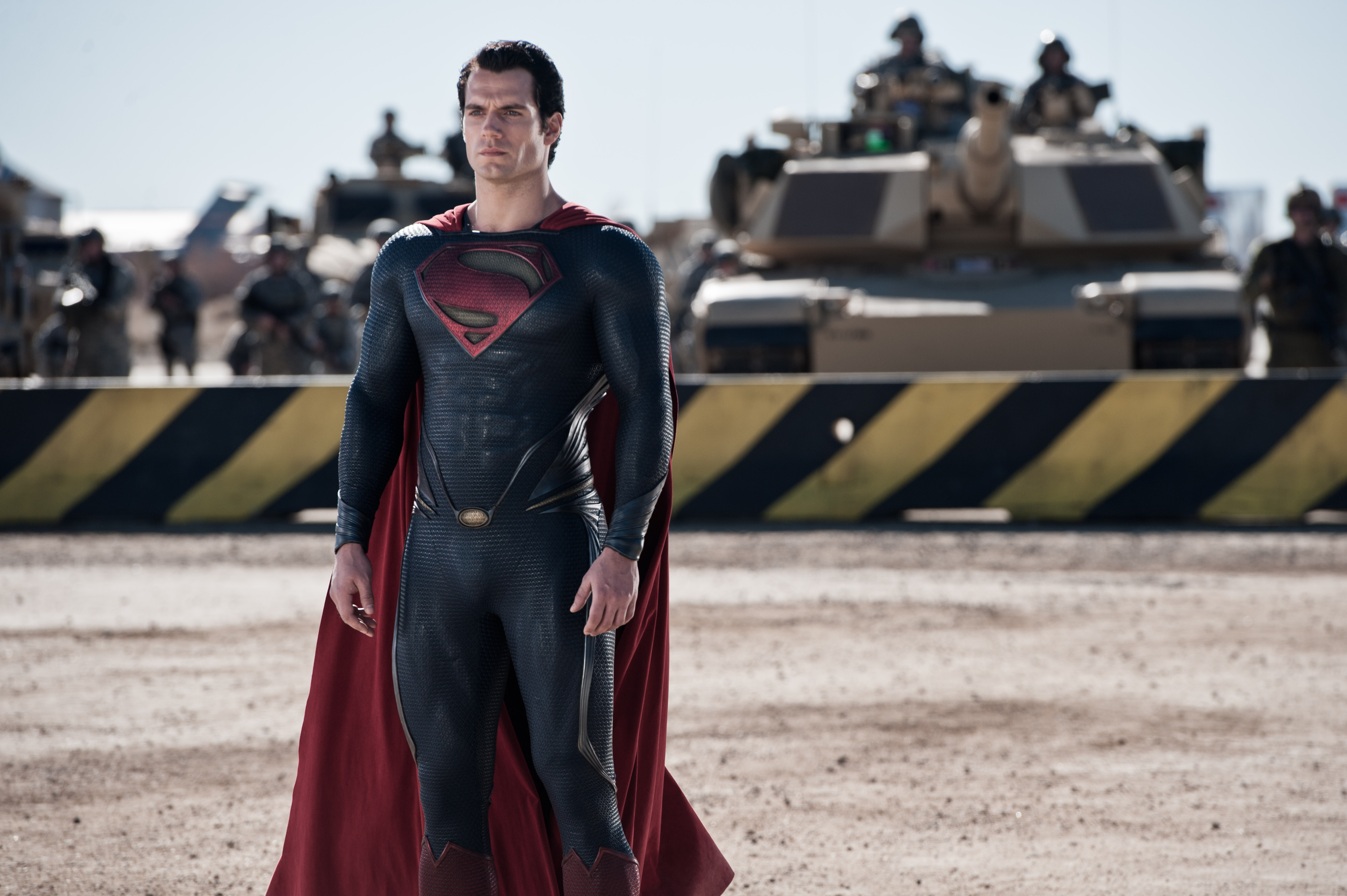
Kansas Family - Clark Kent (Henry Cavill) and his adpoted Mother (Diane Lane)
The reboot keeps together all the classic elements of the series and adds in some extra spice to keep the movie from being overly predictable. Jonathan and Martha Kent cross over into moral grey areas, trying to keep their adopted son's abilities a secret. Lois Lane has finally thrown off all the anti-feminist shackles of ditziness that plagued her throughout all the past portrayals. And Clark isn't a standup American home-boy. He's a drifter trying to figure out where he came from and what he should do - there's only so much rural American farmers can tell you about being a super-powered alien.

Where Man of Steel shines is in portraying Superman's relationship with humanity. The major theme in the movie is that of trust. And he doesn't trust America to know his secret, just as they don't trust him having hidden among them for 30 odd years. The world doesn't immediately take a shining to him because he puts out a few fires or saves a cat from a tree. The movie does well to grapple with what would happen if an Alien showed up on our doorstep.

Special mention must go to the film's addressing of people's core issue with Superman - that he's invincible. This is very much established that it's not the case. We see what Superman Returns failed to really show us - peril. Superman gets hurt, beaten down, even bleeds fair bit. This is a Superman who is pushed to his limits in a painful way. 


Not quite sure of himself, gearing up for battle

I did mean what I said, however, when I said that the movie was 'the best that they could do'. In order to do this movie and keep in believable and epic, the pace of the movie had to be set to fast forward. Scenes are cut together quickly, large swathes of time and character development left up to our imagination and a few significant plot developments happen off screen. 

All the criticisms I've read about this movie more or less stem from a disappointment in the way the plot and characters are developed. Perhaps I look at Man of Steel through the rose coloured glasses of a fanboy, but the way the movie played out felt as if all those extra scenes were written, and maybe even filmed, but not shown. Such is the constraint of having to contain an origin story within 2.5 hours that a significant chunk of these things need to be abridged, or even left out altogether. 

That having been said, Batman Begins suffered from many of the same detriments. But that movie gave The Dark Knight the ability to cast off the shackles of having to establish origins and focussed on Bruce Wayne's single greatest conflict and delivered to us the best superhero movie to date. I sincerely hope that Man Of Steel's sequels (which are now in production) will do the same.


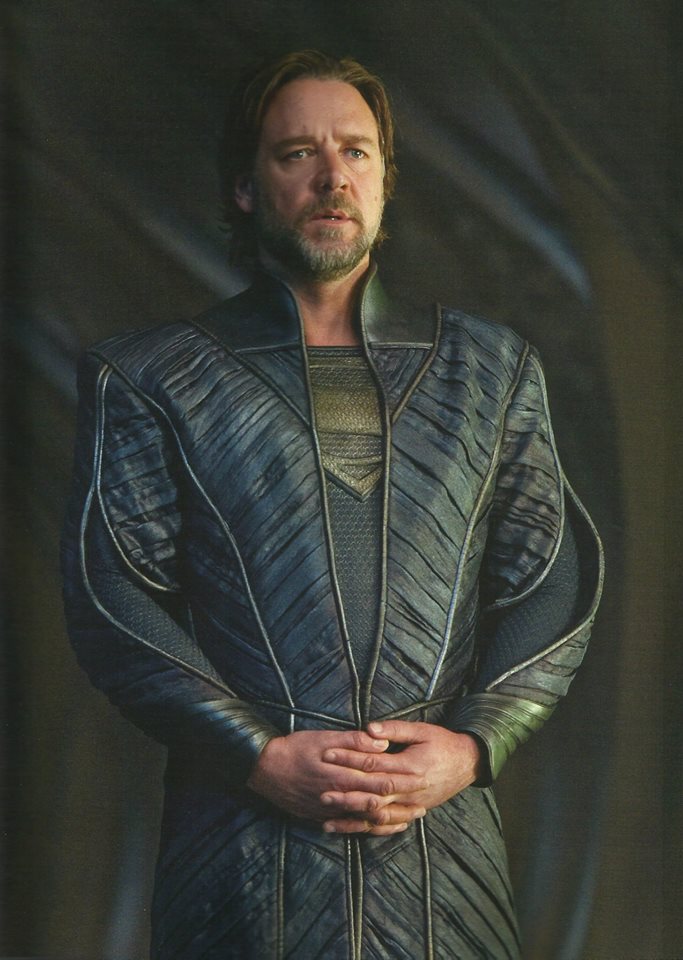
Footnote: I laughed like a drain when I originally heard that Russel 'telephone-throwing kiwi' Crowe was playing Jor-El, a part previously played by Marlon Brando.

I walked out of the cinema thinking that he was kind of a badass.


....
Post-Scriptum - Bugger it. I'm going to do a spoilerific analysis at some point in the near future. Stay Tuned!

Friday, 26 October 2012

Zombies, and such

The mantra of zombie-apocalypse fiction is essentially this: watch people go mental as the world goes to shit around them. And my god, we can't get enough of it these days.

Somehow, in the last 10 or so years, Zombies went from the realm of hammy horror movies to the obsession of not only geeks, but a good chunk of the young populous. The once small sub-genre of horror has now become a monster of popular culture in its own right, spawning fiction that has more or less transcended the horror parent-genre from which it came. It's even inspired some very specific and quite successful satire.  So why do we love zombie apocalypses so much? Because we all reckon we could survive one. 

It wasn't always like this. Zombies were popular pre-2000, yes - but only as much as other recurrent horror themes, like dream invasion, maimed serial killers or crazy Texans with chainsaws. The zombie movies of old, the Night of the Living Dead series being possibly the most notable, were just horror movies. And as serious as horror movies try to be, sophistication and artistic integrity has always been sacrificed for the gore factor. Zombie movies, like other horror movies, used to have a very simple task - scare people and freak them out on a basic, visceral level.

Today zombie fiction is prolific - and some of it is pretty good at that. Both the comic and television series of The Walking Dead are doing immensely well and are quite compelling. The subject matter was treated quite realistically and with much consideration in World War Z. And it's been lampooned very successfully in both quintessentially English and quintessentially American ways in Shaun of the Dead and Zombieland, respectively. Our Zombie obsession extends beyond even fiction - we have best-selling educational guides on how to survive a zombie apocalypse

Shaun of the Dead - somewhat funnier than the Scary Movie series

Starting at around about the time Lost came out, the popularity surrounding zombie apocalypse fiction skyrocketed immensely. Despite the fact that show itself wasn't about zombies, it did well to popularise many of the themes that we seek from zombie apocalypse fiction today. It portrayed people put in a desperate (though not impossible) situation and losing their sense of human decency as the comforts of 'civilisation' were removed. We subsequently came to love Zombie fiction for two main reasons - survivalism and psychology. 

It is interesting to note that what sets Zombie fiction apart from other horror fiction is that humans are given a fighting chance. The Resident Evil franchise, 28 Days Later,  I Am Legend (the Will Smith version, not the one with Moses in) and pretty much all other zombie fiction depicts humans as having a damn good fighting chance. 'Healthy' humans are portrayed as being able to defend themselves, establish stable communities and, in some cases, even fight back the horde. The same cannot be said for much other horror fiction. The Halloween and Nightmare on Elm St. series tease the audience with hope that the protagonists can survive, but they are invariably overwhelmed by a boogeyman that proves to be too powerful for them.

Zombies are slow and dumb. Their advantages lie in the fact that they only have one weak spot, are unperturbed by fatigue or exposure, and in their overwhelming numbers. They are a manageable threat, and as a literary antagonist do not have any surprises that supernatural boogeymen or overly-intelligent axe maniacs traditionally have (by virtue of vaguely defined abilities). We seem to have zombies figured out, and for that reason, given a little bit of common sense, we believe we would survive in the face of the apocalypse. Pack camping gear, grab a melee weapon, avoid drawing attention, and, in the face of danger, go for the brains.

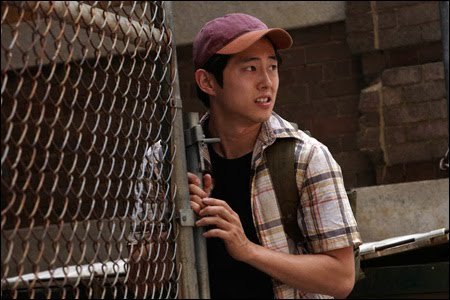
The seemingly widespread nature of this zombie survival knowledge adds an extra layer of enjoyment when flexing our 'well I could do better than that' reflex. When we read action based fiction, we realise the protagonists are probably more prepared than we are for the situations they get into. When we get into Drama shows, we acknowledge that human emotion is rather complex and that we don't have full control over how we might react to a given scenario. But Zombies? The pack from Shaun of the Dead should have picked a more fortifiable position than the local pub. Rick from The Walking Dead should have probably should have realised that Shane was a massive prick a long time before he actually did. And in the same series, the character of Glenn seems to be an homage to us, the well-informed zombie pop culture consumer. In a rather meta-fictional way, he's got a knack for avoiding zombies for no other reason than he is a massive geek.

Glenn from The Walking Dead  - 'What'd you do before all of this?' 'Delivered Pizzas'.
With this, though, we come back to where we started - watching a group of people lose all sense of human decency. This is a staple of survival fiction. If civilization falls down, if basic assumed comforts are taken away, a group of people will turn on each other and it will get nasty. Stuck up city types grow indignant at the lack of homely comforts and sometimes get violent. Hermits are forced to interact with other people in uncomfortably close quarters, and sometimes get violent. Police Officers, teachers and other authoritarians get ignored, and sometimes get violent.

We have become fascinated with the idea of human behavior under dire straits. Recent times and increasing existentialism has made us really want to examine the idea of humanity and human decency. Do we sacrifice our moral codes for the sake of survival? Is human decency and basic consideration other people just artificial constructs of our society, or should we live by these moral codes, even in the face of the end of the world? Do we euthanise the bitten infected little girl who's about to turn? What about when we start running low on food? Do we kill people, leave them behind so that we can make it to the next town?

These questions have popularised the standard profile for the protoganists of  survival fiction. He (or she) is invariably a strongly moral person who is forced to question whether or not he is meeting the bottom line for survival, or whether or not he is being brutal enough to protect the group he is leading. And they are a character who sometimes does abandon his morals. Despite the mistakes of the protagonist, good invariably wins out (except in some rare cases).

For this reason we derive some sort of hope from it. We get a payoff as an emotionally invested audience that human beings aren't just animals at the end of the day. When it all goes bad, we can be like the hero, we can defend humanity in the face of brutality. We like to believe so, anyway.

Jack of Lost - the protagonist mould into which Rick Grimes  from The Walking Dead and Shuan from  Shuan of the Dead are cast.


Given global warming, the impending energy crisis, recent economic disasters, increased awareness of ongoing global conflict and the end of the world slated for 2012, we can't help but be pre-occupied thinking about what would happen if an apocalypse came to pass. And as cynical as our parents claim us to be, we still want to believe that we could survive, and uphold human decency in the process. Zombies give us a well defined scenario that we can prepare for. We like it because at the end of the day, if a Zombie apocalypse happens (and by some stroke of luck it happens exactly in the manner in which we're expecting), you can be damn sure that we'll survive, shotgun and shovel in hand.


Thursday, 18 October 2012

Batman is better than Superman

Unless you're a die-hard fanboy (ahem), it is very hard to read a Superman comic or watch a Superman film and feel connected with the big blue boy scout. It's taken me three awesome Batman films, all of the films leading up to The Avengers and the recent reboot of the DC comics universe for me to realise this - but it's become almost impossible to write a compelling Superman story. 

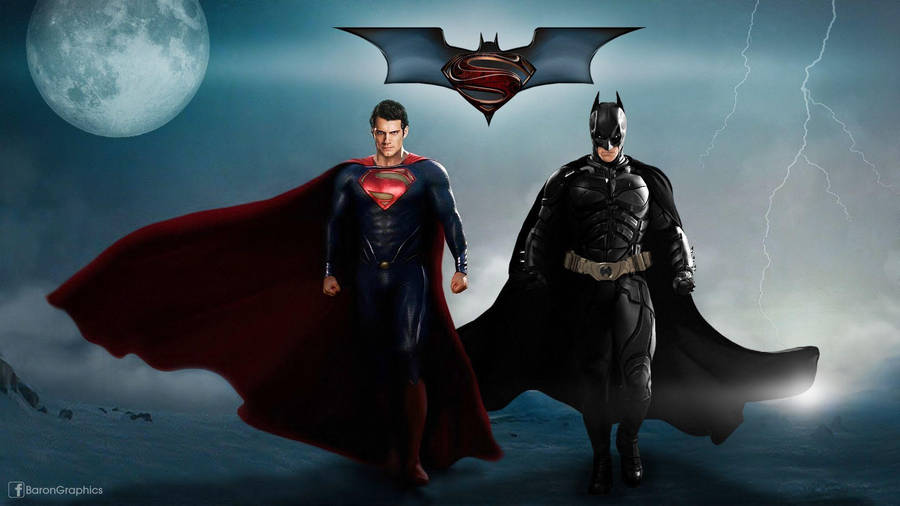
Batman stole his chips

Let me start by backtracking my blasphemy just a little. Superman has been many times referred to as the superhero - the first, the most righteous, and arguably the most powerful. He is the moral compass of the DC universe and the light which many other superheroes follow. He is invulnerable as well as being (pretty much) infallible in his morals.

But it's for precisely these reasons that the Superman franchise has become stale.

This becomes particularly clear when you examine the last two Christopher Nolan Batman films What made The Dark Knight and The Dark Knight Rises so compelling was that the Joker and Bane bested Batman - intellectually, physically and spiritually. One of the core elements that made Nolan's films so compelling was that you really did not know if Bruce Wayne could pull through. The grit and reality with which he portrayed that struggle was what we wanted to see.

This 'come at me bro' ends badly for the Bat.

The first problem with Superman is there is never much of a contest (in any believable context). In Superman Returns, despite the plot having to fall back to the anti-deus ex machina that is Kryptonite, he still pulls through and lifts an entire island of Kryptonite and throws it into space. And the Death of Superman comic story arc was supposed to present the Doomsday monster as his final match - culminating in a violent and bloody death. But this was all completely undone when a) he came back to life and b) subsequently defeated an entire army of Doomsday clones in a later Superman/Batman story arc. 

What films like the recent Amazing Spiderman and The Dark Knight Rises have is a true sense of heroic struggle. Peter Parker has to grow as a person and become stronger physically in order to actually get to a point where he can save the day. Bruce Wayne not only gets his back broken, but has to confront human indignity at almost every turn before he manages to beat Bane. In both of these movies we see the kind of conflict that makes us slump back in our seats and say 'crap, he might actually not make it out of this one'.

Andrew Garfield gets curb-stomped rather alot
And this is the second and essential reason why people don't connect with Superman - no conflict means no growth. In the first Superman movie, he looses and like a petulant child, disobeys his father's dictum to 'not mess with humanity' and decides to turn back time. With Doomsday, as with Superman Returns, the writers decide to take advantage of how ambiguous Superman's powers are and pull an extra can of whoop-ass out of the bag at a convenient plot point. 

None of these instances in Superman's history have inspired us to really feel for the guy. We connect with losers. And strangely enough the problem isn't that he never looses (nor do any of the other superheroes). The problem is we don't know how he could loose. No one has done a good job of defining the limit to his powers and put him in a context where he really has to struggle to break those limits. And no, Kryptonite doesn't count because it is an overused deus ex machina and its speculative effectiveness was nullified in Superman Returns.

In fairness - Superman II and Superman Returns show him getting curb stomped in a much similar fashion to other successful superhero movies, but neither really show how any personal realisation helps him overcome the conflict. This inner journey is what we crave from superhero movies. Ultimately we've grown to a point where we don't just want big effects, seeing superhero beings destroy the cityscapes. If we just wanted that we'd just go and see The Avengers again. There's a deep philosophy behind being a superhero and the idea of power being inherently tied to social responsibility. We're aware of this, and we get disappointed when we don't see it in a Superhero story.

So what would make a good Superman story? I have some ideas - but my not being a professional writer basically shafts all my ideas into the realm of fan-fiction (let us never open that box of despair). But the essential crux is that one would not only need to put Superman into some sort of dire situation, but one that takes a hell of a personal journey to fight back from. And given the stigma that already exists with how uninteresting he is, Zack Snyder is going to have to pull one hell of a cat out of his bag for Man of Steel.


Don't get me wrong - I still love Superman. Despite the fact that he's a wildly imaginary character, I look up to him. There's something in his infallibility and his bravery and his strength that gives you something simple and grand to aspire to. But I'm a particular type of romantic that way. I realise that the rest of the world has a tendancy for not being giddy at the thought of having a big red S emblazoned on their chest.

Friday, 29 June 2012

The Brave and the Bechdel

Two things happened to me recently: I saw Disney/Pixar's latest offering, Brave, and a friend of mine introduced me to the Bechdel Test.

Very many reviewers have already examined what I noticed about the film - that the story seemed to change style somewhere in the middle. The animation, scenery and general visual effects of the film were all quite breathtaking. However, the apparent shift in storytelling paradigm resulted in a movie that was somewhat less baked than it could have been. The main thematic source of praise for the movie stems from the quite honest and endearing portrayal of the mother-daughter dynamic between the protagonist, Merida, and the queen Elinor.

The film's strength - the relationship between Merida (left) and Queen Elinor (right)

This is where the Bechdel Test comes in.

The Bechdel Test is a simple gender-bias test for movies, born from the comic strip Dykes to Watch Out For by Alison Bechdel. To 'pass' the test, a movie is to satisfy three criteria:
  1. It has at least two (named) female characters
  2. Who talk to each other
  3. About something besides a man.
At a cursory glance, the test is a very straightforward way to assess the meaningful presence of women in a film. As a statistical tool, it's an uncomfortable yardstick that sees a significant majority falling well short of these criteria (as simple as they may seem). 

Qualitatively, passing the Bechdel Test signifies that there is portrayal of women in the context of something that doesn't center around a male character. This ostensibly means that the movie attempts to address issues for women in a feminist, or at least a non misogynistic manner. (The extent to which this is the case, though, depends on the length of film for which rule 2 is satisfied).

This is where Brave does quite well. It is un-self-consciously about women. And I say 'un-self-consciously' because it addresses a particular issue pertinent to girls and women without the necessary involvement of a man. At it's heart the movie is about two generations of women reaching a better understanding of each other. 

This is in comparison to Disney's Mulan. Although Mulan is film with strong feminist overtones, the film (and indeed the original fable) concentrates on Mulan filling a role traditionally filled by men. This of course puts a strain on Mulan's ability to pass the Bechdel Test - the film's central conflicts are between Mulan and men, or Mulan arguing about men.

Mulan - masquerading in a male dominated world

Although I say that Mulan and other feminist movies like Mulan are self conscious, I do not doubt the meaningfulness with which they portray their female characters. These characters are able to be important role models for young girls and women.

And although I say that Brave is not self conscious, this doesn't necessarily work in its favour. The elephant in the room, that is that a woman should be used as a political bargaining chip, is never directly addressed. Though this issue is resolved in typically cheesy Disney fashion, the essential feminist issue is never looked into.

Merida draws her bow in defiance of her intended role

In a way, examining Disney films for feminism isn't the best way to go about measuring gender bias in modern cinema. Disney represents a particular branch of American mass media intended and manufactured for a very specific demographic. 

This same fact, however, allows Disney to be used as a yardstick of the progression of gender bias in modern cinema. As the tastes of modern Western parenting have become more progressive, so do the production houses that cater to those tastes. If the sample space were more statistically indicative, it would be interesting to see if there were a correlation between children's cinema passing the Bechdel Test, and modern western cinema in general.

Brave is an interesting step forward. Yes, it has a kickass female protagonist. Yes, Merida is strong, independent, believable and relatable.  And yes, the movie focuses on two women and their struggle to identify with each other. That it seems to overlook one or two issues is a problem that can be attributed to the same reason that the movie comes off as slightly a mediocre piece of storytelling. Hanlon's Razor (modified) - the screenplay was just not that good.


PS: For a more in depth treatise of the effectiveness of the Bechdel Test, read The Bechdel Test: What It Is, And Why It Matters by Emily Monaghan on Squarise.com.

Tuesday, 12 June 2012

I see your film conventions, and I raise you Tarantino

Kill Bill Vol. 1 did two things when it came out in 2003. The first is obvious - a collective parental furor that a movie so violent could be accessible to eager teenage boys. The second is slightly less obvious - intense curiosity brought about by the fact that an entire fight sequence in the film had to be turned to black and white in order to pass censorship. 

My fascination, though, was never to do with the violence in the film or the fact that it got censored - it was the way in which Quentin Tarantino went about bypassing said censorship. Plenty of films in the past have been revised to cut out shots or even entire scenes in order to be approved for general distribution. Tarantino could have easily done this, cut out a few shots of dismembered limbs (or several hundred such shots) and have the film eligible for classification. But he didn't, and that is the whole point of what makes Tarantino films so fascinating.
The Crazy 88s - dismembered in original colour

What Tarantino does best is messing around with our expectations. Instead of doing the usual thing when confronted with the Crazy 88s fight scene, he chose to colour it black and white - and it worked. This, I thought, was beautifully representative of how off-kilter and yet commercially successful Tarantino's film making is. He is a director who does not make films that could be considered conventionally entertaining. Yet his films resonate with a breadth of audience normally associated with big blockbuster Hollywood films. How does he do this? Genre.

He is, as a friend significantly more intelligent than myself put it, "a master of genre".  When we watch movies of a particular genre we know what to expect.  'Revenge Thrillers' we know will fall out in a particular way, and similarly 'sci-fi epics' and 'buddy cop movies' have standard characters and plot devices that we are all familiar with. What Tarantino does, however, is use our knowledge of a particular genre to two particular ends: to skip unnecessary steps in storytelling and then to subvert our expectations from that genre.
 
Reservoir Dogs is an example of Tarantino messing around with plot. The movie is a heist movie where no details about the heist are ever shown. The movie's focus is the personal stories of each of the characters. This fact becomes effective beyond cliché, though, when Tarantino treats the heist as assumed knowledge in order to get on with it. No film making effort is wasted on portraying the planning or the execution of the crime - Tarantino puts all his effort into creating tension and unwrapping the psyche of each of his characters.
Reservoir Dogs - The men, not the crime

Pulp
Fiction manages to take a handful of known characters and spin a completely new light on them. In this movie we see armed robbers, gangsters, a mob boss, and a host of other characters that we see in other films and expect to do certain things. Much of the movie, though, acts as a 'what happens when...' for these particular tropes. What happens after an armed robbery when the two thieves decide to stop off in breakfast for a diner? What happens in the car with two gangsters on the way to a job? What do they talk about?


In Pulp Fiction, Tarantino has quite a lot of fun portraying these characters in situations that would never be shown on camera. You would expect to see two gangster hitmen receiving a job, preparing their guns and taking out their targets. Instead you see them talking about holidays in Europe, gossiping about bosses' wives and having to clean up after a non-chalant but very messy mistake with a handgun.

Films that are this unconventional don't generally find the following that Tarantino's films do. Not to say that other indie films haven't found cult followings. But few have been as big commercial successes as Pulp Fiction or Inglorious Basterds, films that made back their budget almost as many times as you can comfortably fold a piece of paper. And he achieves this by essentially exploiting our knowledge of genre conventions and surprising us in the process.

The second big reason he's able to do this (the first being that he is generally quite insane) is that he spent a great deal of his life watching everything. He spent a significant portion of time as a video store clerk, where all he did was watch films, talk about films and observe what other people liked in films. Tarantino as the ultimate consumer has a profound insight into what his audience knows. He uses this with gay abandon to generally bugger about and have lots of fun. We're fortunate that in this process he's turned himself into a successful film maker with lots of films we can enjoy.

I quite like Quentin Tarantino. He's a man who very un-self-consciously took what makes him feel like a little boy and not only turn it into career, but something that he can exhibit and make the rest of us feel like kids, discovering new things and having lots of fun.

Sunday, 23 October 2011

Captain America is a Walking Bullseye

"Now get your ass up here. We've got just enough time for me to spray-paint the bullseye on your back. Ah, by bullseye I of course mean, uh,  camouflage..."
- Sarge, Red Vs. Blue: The Blood Gulch Chronicles
I was mostly quite impressed with how Joe Johnston's 2011 film adaptation of Captain America initially handled how monumentally silly Captain America's costume looks (even by comic-book standards). Steve Rogers, AKA Captain America, is initially recruited by a United States Senator eager to increase the revenue going into fighting World War II and is used as a predictably very cheesy poster boy for the war effort. Essentially, he becomes a mascot for war-bonds

Against the backdrop of gaudy vaudeville dancers singing about the war-effort and capturing the heart of a more impressionable 1940s America, it makes sense then that Captain America would wear the long-johns version of the American flag, don a cap with a giant 'A' on the forehead and carry a shield that's begging to be punched because of how stupid it looks. It's not meant to be functional or even cool - it's meant to be a tongue-in-cheek homage to the original Captain America costume, satirising how silly it all looked.

Then they unveiled his battle costume. And the whole point of the satire kind of went out the window.

Captain America - Joke Costume and Actual. Spot the difference.
In general, superhero costumes are meant to be, well, a bit silly. But I am on the side of fanboys, comic-book readers and cartoon followers when I say that they do (for the most part, at least) have a point beyond the obvious 'look at me' factor. They can be infinitely functional and serve as good identifiers for a brand, much like for the Police or any Emergency Services. And in most of the cases where costumes are showy and gaudy, that showiness and gaudiness has a point.

To illustrate this, I'll take a look at the hero who's appearance is easiest to justify - Batman. Though it started off as being a costume mostly for the sake of being a costume, the Batsuit has evolved over the years into something which has two distinct and very necessary motivations: the armour, and the symbol.

Batman over the years - from silly to functional
Batman's armour plays a major role in Batman's overall abilities. Depending on which versions you happen to come across,  the Batsuit is made from materials that range from specialised and hardened rubber, to armoured kevlar plating. The point of this, of course, is quite simple - to take bullets, punches and hard falls. The amount of acrobatics and sheer violence involved in Batman's day to day activities would necessitate a hard outer shell. Street thugs and your average bank robber wouldn't really stand a chance punching into abs lined with hard metal.

Secondly, the symbol and appearance. Off the bat, its fairly obvious that the colour scheme that Bruce Wayne has chosen is good camouflage for night-based shenanigans in a Gothic inspired city. But beyond that (and a point which works such as Year One and Batman Begins go into a fair amount of detail) is that the Bat and the Bat-crest are a symbol. This symbol is meant to inject fear into the heart of criminals and, to a lesser extent, hope into those who would uphold justice. The prevalence and recognition of this symbol would mean that Batman doesn't have to beat up criminals in order to stop the crime. Criminals don't commit crimes because of the mere threat of being beaten to within an inch of their life by a borderline psychotic.

And besides that, it actually looks pretty damn cool.

Either if not both of these two points hold true for most other superheros. The Green Lantern wears an identifying uniform just like any other law enforcer (domestic or inter-planetary). The acrobatic feats performed by Wonder Woman, the X-Men, Spiderman and the Flash would mean that they need leotard-like tights to allow for certain degrees of freedom in movement. Superman wears a red cape and a giant 'S' on his chest to inspire hope, selflessness and goodwill in others.

Green Lantern, Wonder Woman, Cyclops and Spiderman

So what's my gripe with Captain America? Two things.

First is the setting of his story and his acts. Admittedly the World War II setting is something that is particular to the movie and a select number of comic books. Here is a man who is supposedly a super-soldier, participating in convert ops and special tactical missions in order to undo the Nazis. With all of this in mind, you can't help but realise that, especially for someone who specifically is not invulnerable, his costume screams 'Bullseye'. His shield is circular and has very colourful concentric rings to let a lookout know that he's coming from a kilometre away. There's a massive bright white star on his chest to guide a marksman to his vital organs. And you get bonus points if you manage to sock him where the 'A' is on his forehead.

The second point is that it's all just too...American. As much as Superman has been pushed over the years to eschew particularly American values ("Truth, Justice and the American Way"), his appearance and presentation have always maintained a level of flexibility such that he can represent these values from a universal perspective. His 'S', Spiderman's webbing and even the stars on Wonder Woman's undergarments can be removed from the 'American' framework if the writer sees fit to have them represent greater values. Captain America is too closely tethered to the stars and stripes all over his body and his name for that ever to happen.

Maybe, since most of the superhero movie-watching, comic-book-reading public come from America, this doesn't matter in the grand scheme of things. That's fine. As long as he stays bright and stupid enough for anyone gifted with human sight to pick him off for a distance, the rest of the world will be ok.

Target Practice

Perhaps I am being a bit harsh. The movie does do a good job of trying to circumvent these issues. Steve Rogers isn't fighting so that America is king, he's fighting because he 'hates bullies' - a simple but very noble sentiment. And the dulling of the colours, the removal of most of the red and white stripes and the amalgam of the traditional Captain America tights with a sturdy flak jacket and heavy pants make it all work within the context of a fun action movie... to an extent.

It just seems a little sad that Captain America is too mired his original 1940s identity and appearance for these problems to be overcome.

Sunday, 16 October 2011

There Will be Wood

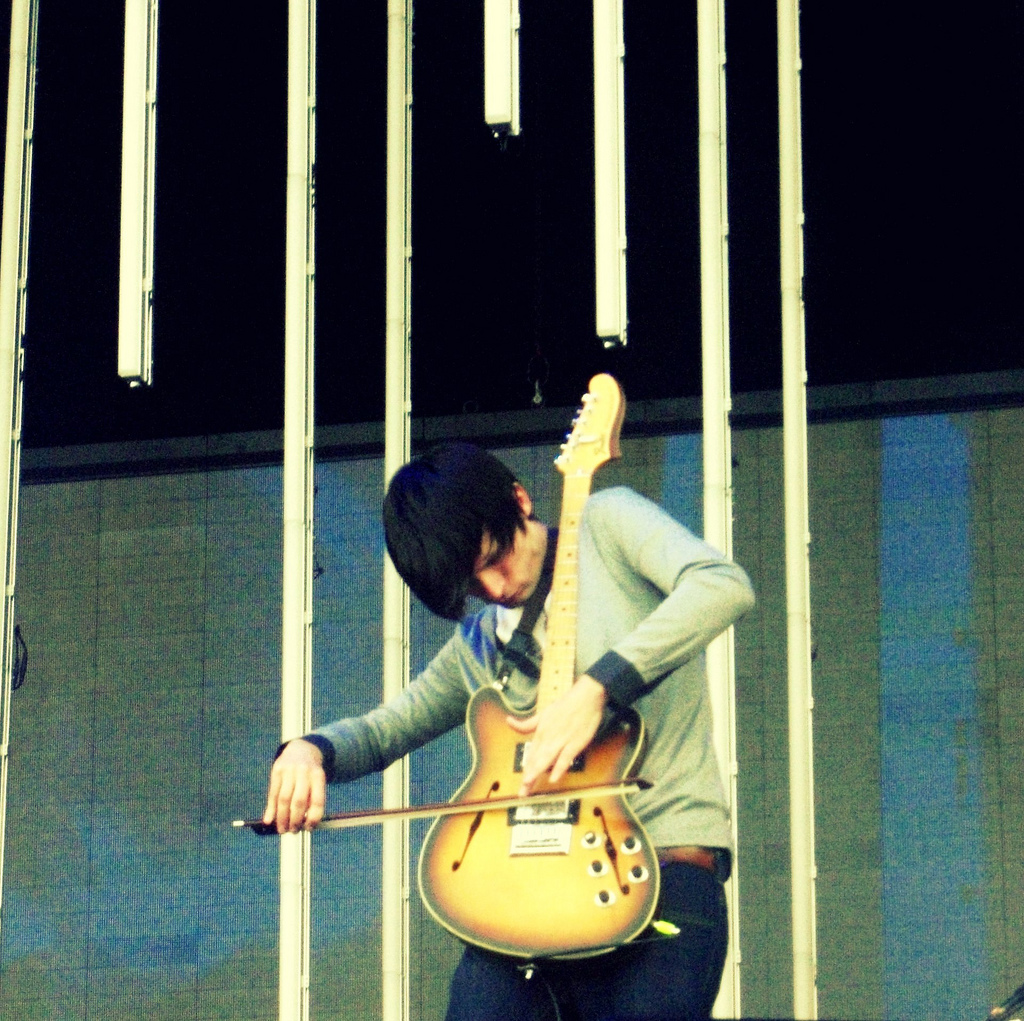
Up until recently I only thought of Jonny Greenwood as 'that awesome guitarist from Radiohead'. Consequently I chiefly associated him with bizarre, dissonant but very awesome guitar riffs and tones. When I had heard that he had composed the score to the film adaptation of Haruki Murakami's Norwegian Wood, I thought that it would be similar to the prevalence of Radiohead's music in Linklater's A Scanner Darkly (ethereal, esoteric sort of electronica).

Imagine my surprise, then, when I watched a movie with some of the most jarring and emotionally wrought classically-based string compositions I have ever heard.


For those who are acquainted with Haruki Murakami's novel and the works of Radiohead, it actually isn't overly surprising from a thematic point of view. Norwegian Wood deals with a young and profound tragedy that pervades the existence of the novel's protagonist, Watanabe Toru. The subsequent sense of (almost) hopeless depression and discord in Watanabe's life is not an uncommon theme in Radiohead's music.

Hence, it's not entirely unexpected that Jonny Greenwood should compose a score to reflect the same set of emotions.  Sure, his compositions are strongly string based, but it's not such a stretch, given previous demonstration of his musical finesse in Radiohead, that he would be capable of composing pieces for a string orchestra. Not to say that the music was by any means simple - it was powerfully moving. Without it, scenes in Anh Hung's faithful film adaptation would be lacking in a lot of emotional power.

The real shock came when I sat down with a friend and watched Paul Thomas Anderson's 2007 film, There Will Be Blood. The film portrays the rise of a successful Oil Baron (played by Daniel Day Lewis) and his descent into madness as he lusts after money and power.

The key to understanding this character and the movie, though, especially within the early scenes of this film, is Jonny Greenwood's score.


The beginning scenes of this film could rather be innocently confused with 'just' another film portraying the somewhat repulsive nature of big corporations. The dissonant and darkly foreboding nature of Greenwood's score, however, do an amazingly effective job of conveying how deeply disturbed the events unfolding in the film are.

Greenwood's composition is, in a word, wrong. The broken rhythms, the string sections not agreeing with each other, the dissonance and sparseness of the music - they all alert you to the fact that something is very very wrong. Daniel Day Lewis's character is so good at acting like he's honest that without the music, you would believe that he was a good man. Such is the power of the score, however, that you can't shake the feeling that something deeply, deeply wrong is happening.

This sense of dissonance pervades the entire film and eventually builds to the point where what is happening on screen finally fulfills the promise put forward by Greenwood's haunting score. The effect is powerfully disturbing.

The music in this movie is beautiful, moving and complex. Most of all, it comes from a completely different direction to  Radiohead's Punk-Rock based roots.

There Will Be Blood went on to be nominated for eight Academy Awards. Best Original Score was not one of them.

The reason cited for Greenwood's disqualification was that his work for There Will Be Blood did not contain a large enough ratio of music developed specifically for the film to music taken from elsewhere. This was in no small part due to Greenwood adopting many of the themes from his score directly from a previous string composition of his, Popcorn Superhet Reciever - a piece he composed whilst the BBC Concert Orchestra's 'composer-in-residence'


When Thom Yorke did work independent of Radiohead, he made The Eraser, a mainly electronic album that reflected a lot of where Radiohead were going anyway. When Jonny Greenwood went solo, he became the BBC Concert Orchestra's 'Composer-in-residence', composed three piano and symphony based pieces and wrote the score to two of the best movies I've seen in recent years.

I was shocked by how different this music was from what I expected when I thought 'Jonny Greenwood' and I am in awe of precisely how much of a talented musician this man must be.

The world needs more creative forces like this one.


And yes, I am well aware that the title of this post sounds somewhat like the title to a porno.

Wednesday, 28 September 2011

Why alot of superhero movies fall flat.

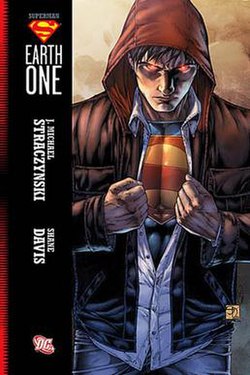
I read J. Michael Straczynski's Superman: Earth One with some relish. The only complaint that I had was that Shane Davis went a bit overboard with trying to make Superman look hip to the kids (he wears a hoodie (pet hate #25) and looks alarmingly like Robert Pattinson as Edward from Twilight on the front cover (pet hate #47)).

If Lois Lane ended up looking like Bella, I may have thrown my laptop (I mean, uh, legitimate paper copy of the comic book) out the window.

 Yes, Clark comes off as being a bit too much of an 'angst ridden teen' (IGN), and yes, perhaps the circumstances that lead him up to taking on the Red and Yellow 'S' insignia seem to detract from traditionally infallible portrayals of Superman. At the end of the day, though, what I took away from the book was not only how precisely human Clark Kent is portrayed, but also the manner in which Straczynski manages to pull it off. It made me realise precisely why I love the Bryan Singer movie so much and why I'm not particularly relishing in the idea of Zack Synder (of Sucker-Punch fame) directing the new Man of Steel.

Starcynski's portrayal of Clark's journey  (*retch*) is particularly effective in how understated it is. The dialogue between Clark and his mother and the flashbacks to his life and self discovery in Smallville are very effectively interwoven with his struggle to find out precisely who he is. The comic relies on Shane Davis's quite emotive artwork, portraying young Kent as someone who really is suffering for his inability to be human. Earth One doesn't labour the point and doesn't tell us what Clark is thinking. It makes us figure it out by humanising him and allowing the reader to feel his pain.

What both Starcynski and Davis manage to do together is avoid what a lot of modern superhero films (and for that matter, comic books) are doing - wowing us with big explosions, stunt sequences and fun romance. Sure - Earth One does have a fair bit of action in it, but it has a point. And as an intelligent reader you never think that the action is just there for being action, or that Superman is firing off his heat vision just for the lasers pew pew fanboys.

The main question I had in mind in writing this post is, why couldn't more Superhero movies have an emotional point? Superman Returns will remain one of my favourite Superhero movies of all time because of the fact that Singer makes a point of pulling as many filmic tricks out of the bag as possible to get us to relate and really feel Superman and the people around him. The flying scenes and the special effects are there, of course, like other films. But Singer's inclusion is so much more subtle, as if Superman does this every day. And the effects don't detract from the point of the film: that Superman is back, and is not really sure how he fits in.

Clark Kent - Awkward Central


I guess, at the end of the day, I want to relate to my superheros in a lot of the same ways that the comic book writers of old did. Superman and The X-Men and others were all written so that those who felt as if they were insignificant or misunderstood could believe that someone like them could do something magnificent and feel accepted. But in order for myself, and others, to really feel that and immerse ourselves in the story, I guess we're asking that writers, film makers and comic book artists try to maintain some finesse in worming their way into our hearts and minds.

Snyder, if you ruin Superman for me, I will do unto you what I did to the writers of Smallville...

Nothing at all to be honest.